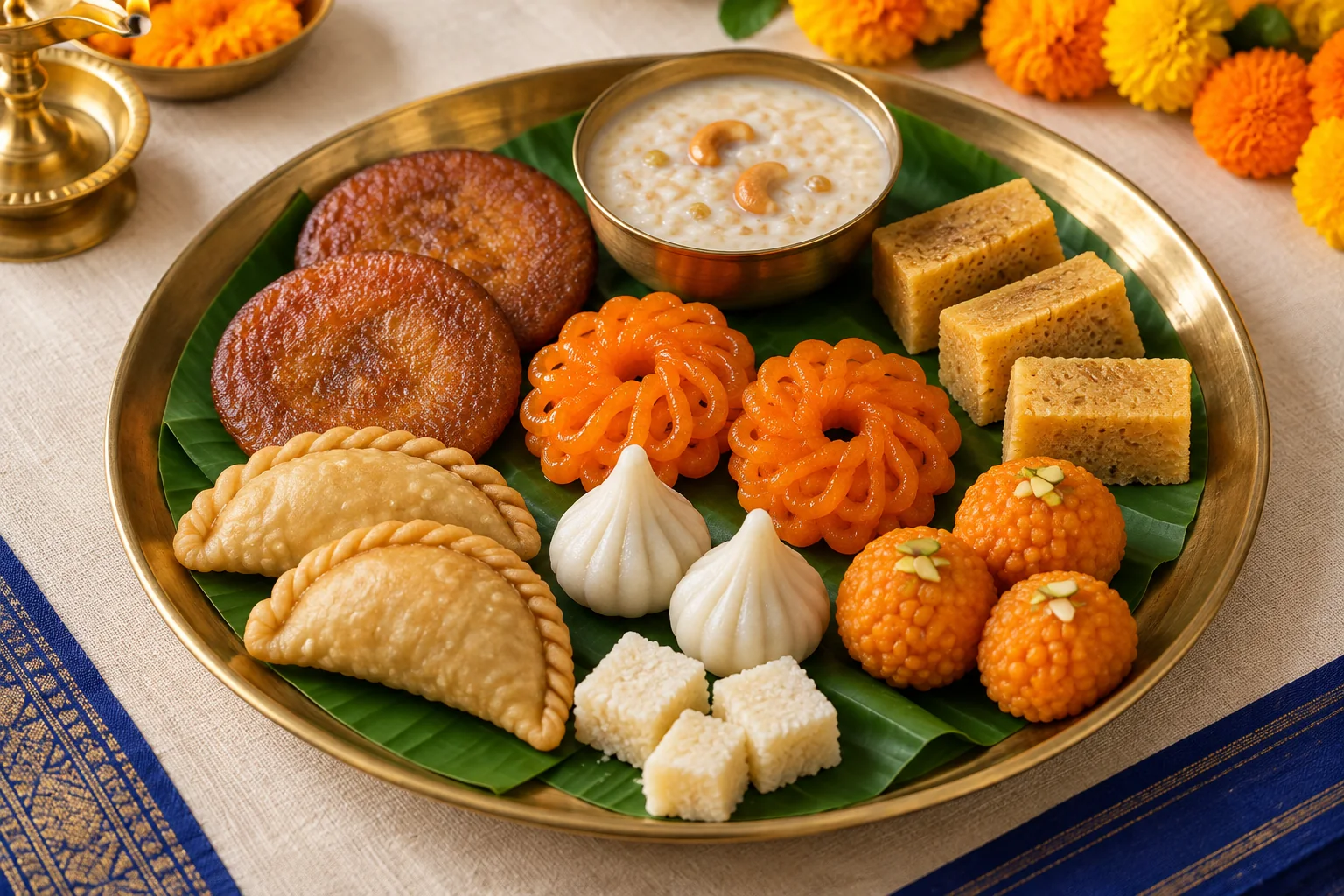
A sweet served at the right moment can make a function feel complete: a small laddu offered to guests, payasam at the end of lunch, or a box of familiar favourites sent home with relatives.
If you are planning a wedding, engagement, valaikappu, housewarming or festive gathering, these 20 sweets offer a varied starting point. Choose according to your family’s customs, guest preferences and how the food will be served.
Start with the function, not the number of sweets
Twenty options do not mean twenty dishes on one menu. Begin with the way guests will eat: a seated wedding lunch, a breakfast after a ceremony, an evening gathering or a sweet box to take home.
A useful starting point is one soft or spoonable sweet and one contrasting piece sweet. Then adjust to your family’s preferences and budget. Keep religious offerings, ceremonial displays and guest refreshments as separate planning decisions where your customs require it.
Family traditions come first: Tamil functions vary across regions and communities. This list includes Tamil festive preparations and wider South Indian favourites served in Tamil celebrations; it does not claim that all 20 originated in Tamil Nadu or belong at every ceremony.
1. Adhirasam
Rice flour and jaggery come together in these deep-fried discs, with a gently crisp outside and a soft, chewy centre. Their dark golden colour and jaggery flavour make them a distinctive addition to a festive spread.
For your function: Consider adhirasam for a family function or a sweet box. Ask for a tasting batch: thickness and texture can differ noticeably between makers.
2. Jangiri
Jangiri is made by piping urad-dal batter into decorative loops, frying it and soaking it in sugar syrup. It brings a syrupy bite and an eye-catching shape to the plate. It is different from jalebi, even though both are looped, syrup-soaked sweets.
For your function: Pair a small jangiri with a less syrupy sweet. For gifting, ask for packaging that keeps syrup away from dry items.
3. Mysore Pak
Made with gram flour, sugar and ghee, Mysore pak can range from firm and porous to soft and rich. Its name connects it with Mysuru in Karnataka, but it is also a familiar choice in Tamil sweet shops and celebration menus.
For your function: Specify the style you want before ordering. Neatly cut pieces work well for a plated sweet or an assorted gift box.
4. Boondi Laddu
Tiny fried gram-flour droplets are combined with sugar syrup and shaped into round laddus. Cardamom and nuts may be added, depending on the recipe. The small boondi beads give this sweet its characteristic texture.
For your function: Choose a consistent piece size for easy serving and counting. Ask about nuts and other added ingredients before finalising guest labels.
5. Badusha
Badusha has a layered, tender centre beneath a sweet sugar coating. It is generally made with a flour-based dough and fried before being coated or soaked in syrup. Recipes differ in the fats and dairy ingredients used.
For your function: A small badusha can complement a soft dessert such as payasam. Give it a separate compartment when packing an assortment.
6. Palkova
Palkova is a rich milk sweet made by reducing milk and sweetening it. Its slightly grainy texture and concentrated milk flavour offer a change from fried and syrup-soaked sweets.
For your function: Serve modest portions in cups or a suitable dish. Ask the maker for transport, storage and use-by instructions, especially for takeaway boxes.
7. Sakkarai Pongal
This sweet rice preparation is often made with jaggery, moong dal and ghee, with cardamom and a cashew garnish in many versions. It is strongly associated with festive cooking, including Pongal celebrations.
For your function: Consider it for a traditional meal when it fits your family customs. Arrange bowl or leaf service so guests can enjoy its soft texture.
8. Akkaravadisal
Akkaravadisal is a rich, soft rice preparation made with generous milk and ghee and typically sweetened with jaggery. Some recipes also include moong dal. It is distinct from a simple sweet pongal in its particularly creamy character.
For your function: Choose it as the main soft sweet rather than adding several similar rice desserts. Check religious or family requirements separately if it is intended as an offering.
9. Paal Payasam
Milk, rice and sugar form the base of this gentle, creamy dessert. The rice softens as it cooks, while the milk gives the payasam its rounded flavour. Garnishes and consistency vary from kitchen to kitchen.
For your function: It can finish a seated meal or be served in dessert cups. Agree on cup size and the number of servings with the caterer.
10. Paruppu Payasam
Paruppu payasam is a lentil-based dessert, often using moong dal with jaggery. Coconut milk, dairy milk or other additions depend on the recipe. Its flavour offers a contrast to sugar-and-milk desserts.
For your function: Ask which version your caterer makes. If you choose it for dietary reasons, verify the actual ingredients rather than assuming all versions are dairy-free.
11. Semiya Payasam
Vermicelli cooked in sweetened milk creates a familiar dessert with a delicate strand-like texture. Cardamom, cashews and raisins are common additions, though households and caterers adapt the recipe.
For your function: This is a straightforward option for a family lunch or small celebration. Confirm the vermicelli ingredients when discussing dietary restrictions.
12. Rava Kesari
Roasted semolina, sugar and ghee create a soft sweet that is often flavoured with cardamom and finished with nuts. Its colour depends on the preparation; a bright orange shade is not essential.
For your function: Consider a small serving alongside a breakfast or tiffin menu. Ask the caterer to keep the texture soft and portions consistent.
13. Ashoka Halwa
Ashoka halwa is a moong-dal-based sweet made with sugar and ghee. Versions may also contain wheat flour, nuts and colouring. Its smooth, rich texture makes it quite different from a cut sweet or crisp pastry.
For your function: It suits small portions as part of a tiffin spread. Confirm the flour and garnish ingredients if guests have specific dietary requirements.
14. Paruppu Poli
A thin outer dough encloses a sweet lentil filling, usually made with chana dal and jaggery or sugar. Cooked on a griddle, poli offers a soft, filled-flatbread texture rather than a syrupy finish.
For your function: Discuss size and serving time in advance. Smaller pieces can be easier to include in a full meal than large, heavy portions.
15. Sweet Somas
Also called somasi, these crescent-shaped pastries have a crisp outer shell and a sweet filling. Coconut, roasted gram and sugar feature in many Tamil versions, with ingredients and proportions varying by family.
For your function: Use them for a tea-time spread or a boxed assortment. Ask how the maker packs them to protect the delicate shell from breaking.
16. Poornam Kozhukattai
These steamed rice-flour dumplings enclose a sweet filling, commonly coconut and jaggery. Their soft shell and aromatic centre make them a different choice from fried sweets. They are closely associated with Vinayaka Chaturthi in many households.
For your function: Include them when they fit your function and family traditions. Arrange preparation and serving times with the cook instead of treating them like a dry boxed sweet.
17. Paal Kozhukattai
Small rice-flour dumplings are served in a sweet liquid, which may use coconut milk, dairy milk or a combination. Sugar and jaggery versions both exist, so the name alone does not tell you the complete recipe.
For your function: Serve in bowls or cups. Ask the caterer which version they prepare and how they will maintain its texture through service.
18. Coconut Burfi
Grated coconut and sugar form the foundation of these cut sweets. Some recipes include milk or other enrichments. The coconut texture and neat squares offer a useful contrast to soft or round sweets.
For your function: Choose evenly sized pieces for an assorted box. Confirm storage and use-by instructions rather than assuming a dry appearance means a long shelf life.
19. Maa Laddu
Also known as maladu or pottukadalai urundai, maa laddu is commonly made with powdered roasted gram, sugar and ghee. It has a soft, crumbly texture that sets it apart from a boondi laddu.
For your function: Consider it for a small family gathering or a mixed box. Ask for sturdy packing so the delicate pieces arrive intact.
20. Ellu Urundai
Roasted sesame seeds and jaggery make a deeply flavoured sweet with a nutty bite. Recipes can produce different textures, from softer ground-seed balls to firmer versions with visible seeds.
For your function: Ask about the texture when choosing for your guests. Clearly identify sesame among the ingredients, particularly in mixed assortments.
Sweet pairings for different functions
Use these combinations as menu ideas, not ceremonial requirements. Check with your family before deciding what is appropriate for a specific occasion.
| Occasion or service | Suggested combination | Planning note |
|---|---|---|
| Wedding lunch | Paal payasam + a small jangiri | Balance portions with the rest of the meal. |
| Engagement gathering | Mysore pak + sweet somas | Offer contrasting textures without too many varieties. |
| Valaikappu | Paruppu payasam + adhirasam | Follow the family’s preferences and ceremonial customs. |
| Housewarming lunch | Sakkarai pongal or paal payasam | Choose one main dessert if the meal is already generous. |
| Morning tiffin | Rava kesari or Ashoka halwa | Plan a small, easy-to-serve portion. |
| Return-gift assortment | Boondi laddu + Mysore pak + somas | Confirm suitability for the journey and separate fragile pieces. |
For a full meal around these sweets, see our traditional Coimbatore wedding food menu.
What to confirm before ordering
- Count: Agree on guests, portions per guest and whether a second serving is included.
- Piece size: Ask for a sample size or weight. “One laddu” can mean very different portions.
- Ingredients: Confirm milk, ghee, wheat, nuts and sesame, including garnishes. Recipes and shared-kitchen practices vary.
- Style: Specify soft or firm Mysore pak, the filling for somas, and the milk or coconut-milk base for payasam.
- Delivery: Fix the preparation, transport and handover schedule with the supplier.
- Storage: Get product-specific storage and use-by instructions. Do not apply one shelf-life estimate to every sweet.
- Packaging: Keep syrupy items separate from crisp or crumbly sweets.
- Price: Compare the same piece size, quantity, packaging, delivery and service inclusions.
If the sweets are for a smaller home celebration, our birthday party at home guide can help you plan the guest list and serving area.
Frequently asked questions
Which sweets can I choose for a Tamil wedding?
Paal payasam, jangiri, Mysore pak and boondi laddu are possible choices. Select a small combination that suits your family, the rest of the meal and your caterer’s strengths; there is no universal compulsory list.
Are all these sweets originally from Tamil Nadu?
No. The list combines Tamil festive preparations with wider South Indian and Indian favourites that can suit Tamil functions. Mysore pak, for example, is associated with Mysuru in Karnataka.
How many sweets do I need for one function?
There is no fixed number. One spoonable dessert and one piece sweet can be a useful starting point for a full meal. Increase or simplify the selection according to guest preferences and portion sizes.
Which sweets can go in a return-gift box?
Ask the supplier about Mysore pak, boondi laddu, somas or adhirasam for your planned journey and handover time. Suitability depends on the recipe, packaging and storage conditions; get specific instructions for each item.
Are jaggery-based sweets sugar-free?
No. Jaggery is a sweetener containing sugar. Describe ingredients accurately and do not label a jaggery sweet as sugar-free.
Can I request dairy-free or nut-free versions?
You can ask, but confirm every ingredient and the preparation process with the maker. Ghee, milk and nut garnishes may appear in recipes that otherwise look suitable, and shared equipment can matter.
Choose sweets that feel like your celebration
A thoughtful sweet menu is about familiar flavours, a good balance of textures and portions your guests will enjoy. Begin with a few family favourites, taste before ordering and give serving and packaging the same attention as the sweets themselves.
Occasion Buddy — Plan. Celebrate. Enjoy.
Recipe references
This is an event-planning guide, not a recipe collection. Descriptions were cross-checked against published recipes and ingredient listings. Suggested pairings are Occasion Buddy editorial ideas.
Keep exploring ideas for your next celebration.
Back to all blogs